
Jeremy Corbyn鈥檚 unexpected popularity in the 2017 UK general election seemed closely related to a which has often been attributed to a set of social media strategies. Labour deliberately set out to exploit young people鈥檚 engagement online by eschewing glossy and overtly managed advertising in favour of the 鈥溾�� promotion of user-generated content.
These were emotive and often satirical materials created by grassroots youth supporters which appealed to grassroots youth audiences. And they worked: that year, sourced most of their news online 鈥� and voted Labour in 2017鈥檚 general election.
At the time of the 2017 election, the Labour leader鈥檚 Facebook page had compared to Conservative leader Theresa May鈥檚 420,000. Jeremy Corbyn also trumped May on Twitter with 1.17m followers compared to May鈥檚 346,000.
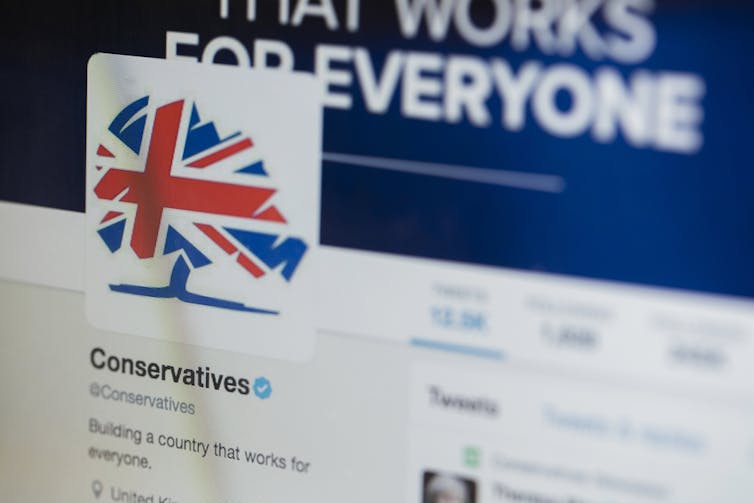
But two years later, just two days into the 2019 election campaign, the Conservatives appeared to be narrowing the social media gap. Displaying a celebrity appeal rather broader than his predecssor鈥檚, Boris Johnson had 761,000 followers on Facebook with Jeremy Corbyn on 1.5m. In 2017, Theresa May had 36% of Corbyn鈥檚 number of likes on Facebook; today, Johnson has more than 50%. The Conservative Party has 690,000 likes while Labour has a million.
While the 鈥� 鈥淰ote Labour for real change Thursday 12 December鈥� had 2,600 people saying they would 鈥渁ttend鈥� and 1,000 saying they were interested, the Convervative Party鈥檚 offering 鈥溾�� had 3,500 going and 3,300 interested. This would suggest a significant shift in favour of the Tories since 2017.
But, a week into the campaign, Labour had overtaken the Tories with 6,100 going and 2,700 interested, while the Conservatives had just 3,500 going and 3,400 interested.
Those numbers are not of course massive (that same day, for example, had 6,900 people interested in attending its Christmas event) but the scale of the shift back towards Labour may be indicative of the direction of travel in the social media war. The Liberal Democrats鈥� Facebook page that day said they did 鈥渘ot have any upcoming events鈥�.
On Twitter, Labour鈥檚 lead has narrowed. Since 2017, has now nearly tripled her Twitter following to 916,000. Meanwhile, Jeremy Corbyn nearly doubled his number of Twitter followers between 2017 and 2019 to 2.1m, while Boris Johnson has 1.2m. Two days into the campaign, the Conservatives had 432,600 followers on Twitter. Their campaign launch tweet had 3,300 likes. The Labour Party had 740,500 followers, with their campaign launch tweet on 5,500 likes.
Political parties remain very focused on Facebook for their online advertising strategies, with Labour 鈥� no doubt attracted by the platform鈥檚 鈥� spending the week before the campaign. The Conservatives, meanwhile, were accused of to finance targeted Facebook advertisements promoting the extent of government spending in key marginal constituencies.
The Conservatives鈥� carefully-managed Facebook promotions could not, however, divert attention from some of their candidates鈥� less salubrious historical posts 鈥� including their Gower candidate鈥檚 declaration that benefits claimants deserved 鈥溾�� and their Wakefield candidate鈥檚 suggestion that former Libyan dictator Colonel Muhammar Gaddafi 鈥溾�� to evade capture.
Indeed, the Tories鈥� own post of a with the shadow Brexit secretary Kier Starmer 鈥� which they shared on both Facebook and Twitter 鈥� did little to turn the tide of online opinion in their direction.
There have been some enquiries about the veracity of Keir Starmer鈥檚 interview this morning where he was unable to explain Labour鈥檚 plan to delay Brexit.
鈥� CCHQ Press Office (@CCHQPress)
Believe it or not, this car crash interview did really take place
馃憞馃憞馃憞
But if the younger demographic is key to electoral success, the relevance of or (which appeal to broader age ranges) may be questionable. It may be that Instagram 鈥� 鈥� is a better place to target votes.
One week into the campaign, Labour boasted 93,600 followers compared with the Conservatives鈥� 80,100. Here, on this key youth-focused platform, the parties鈥� social media gap clearly seems to be narrowing.
Ofcom reported in 2019 that the entertainment platform most watched by the UK鈥檚 young adults is now YouTube (). Its status as young adults鈥� 鈥済o-to site鈥� underlines its potential political impact. Labour posted a YouTube video of its campaign launch on November 6 which attracted 1,200 views in 48 hours, reaching 2,100 within a week.
By comparison, the Conservatives鈥� campaign launch attracted 5,500 views in its first 24 hours, rising to 6,700 in its first week. As the campaign began, the Tories had 38,000 YouTube subscribers, Labour 30,000. Extinction Rebellion had 49,000.
The shifts in popularity witnessed on YouTube may not necessarily (or eventually) prove to be in favour of established political parties.
A YouTube search for 鈥淯K election 2019鈥� directs users first to reports from professional news organisations, as well as a spectacularly patronising video posted by the BBC on November 7 called 鈥溾��. That post had more than 13,000 views in its first 24 hours. The world鈥檚 most-watched YouTuber, PewDiePie, posted a video about on the same day which was viewed more than 2.5m times in its first 12 hours.
Meanwhile, much youth political activity and engagement continues 鈥� as it did two years ago 鈥� to take place at the level of the amateur guerrilla campaign. This was Labour鈥檚 great advantage in 2017, and it may remain so today. Such grassroots protest memes as #FCKBORIS do not require managed channels but draw user-generated content and dialogues to their hashtags (whose traffic far exceeds the 4,500 followers on that movement鈥檚 ).
Posted in July 2019, the profoundly unflattering 鈥溾�� video, for example, gained more than a million views in its first four months on YouTube, as it portrayed an animated version of the prime minister rapping xenophobic slurs to a Stormzy beat.
But YouTube has a long way to go if it is to engage its youth audiences in serious political dialogues. This will necessarily take the form of a bottom-up process, rather than one imposed by an ageing generation of Baby Boomers.
As the 2019 campaign began, the British government鈥檚 extraordinarily out-of-touch YouTube video encouraging people to register to vote () featured frumpy graphics and was fronted by the middle-aged product manager of the registration website.
The politicisation of that platform will start not with government or party initiatives but at the grassroots. It remains to be seen whether that鈥檚 a direction that YouTube鈥檚 influencers and their followers will seek to take.
This article is republished from The Conversation under a Creative Commons licence. The original article was written by , Dean of the Faculty of Arts. .
Press Office | +44 (0) 1962 827678 | press@winchester.ac.uk |
Back to media centre