
,
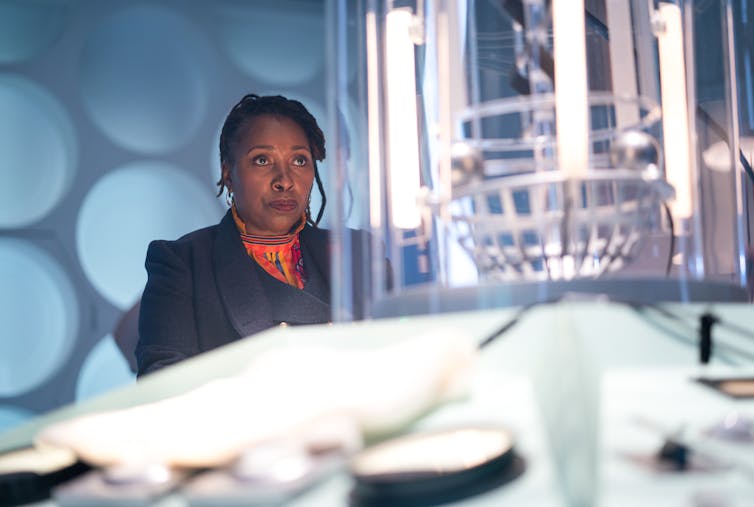
BBC audiences were recently introduced to their . In the episode which aired in the UK on January 26, Jo Martin 鈥� previously best known for roles in Holby City and Blue Story 鈥� played an ostensibly ordinary human who was, towards the end of the episode, revealed as a previously unknown (possibly past, future or parallel) incarnation of television鈥檚 most famous Time Lord.
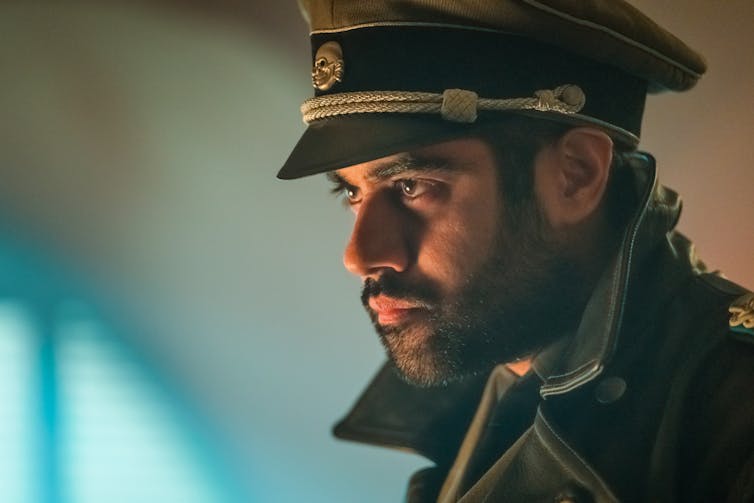
A few weeks earlier the latest version of the show鈥檚 recurring super-villain, The Master, had for the first time been portrayed by a person of colour, a role played with manic zeal by Sacha Dhawan in a performance dubbed by The Guardian as the 鈥溾��.
Both events provoked strong responses on social media, from enthusiastic plaudits through to rants from fans ranging from the sincerely 鈥渨oke鈥� to the reactionary and even racist. The latter response might be considered out of character for the followers of a show whose liberal hero has for more than half a century renounced violence and struggled for peace, social justice and environmental sustainability.
This is a series whose had a female producer, , and a British Asian director, 鈥� phenomena virtually unheard of back in 1963. (The latter was also played by Dhawan in the BBC鈥檚 2013 docudrama .)
It鈥檚 a programme which, in 1972, argued passionately (albeit symbolically) in favour of membership of the European Economic Community (or in its own terms ), and railed against the impacts of industrial pollution.
In recent years, it has foregrounded , issued dire warnings against and even made to the fabrication of evidence to support the invasion of Iraq.
Yet since 2017, when Jodie Whittaker was cast as the first female Doctor Who, arguments have raged between those strange misogynists depicted by the Huffington Post鈥檚 Graeme Demianyk as 鈥溾�� and, in contrast, the likes of The Guardian鈥檚 Zoe Williams, who heralded Whittaker鈥檚 Doctor as representing 鈥溾��.
If, like mine, your social media bubble overwhelmingly favoured the Remain campaign and still can鈥檛 get its head around the fact that the majority of people didn鈥檛, then your friends and followers may well have applauded Martin鈥檚 appearance. But you might then be surprised if you were to venture into some Doctor Who . You鈥檇 see quite a backlash against what some perceive as the politically correct direction their favourite show has taken. 鈥淭his show and all it used to offer has been destroyed by politically correct writing and casting,鈥� opined . Another responded: 鈥淚t鈥檚 not 鈥榳oke鈥�, unless your idea of woke is 鈥榠t has a black woman in it鈥�. It鈥檚 the blandest form of mainstream liberalism but some internet talking heads treat it as if it was 50 minutes of Jodie Whittaker reciting the Communist Manifesto.鈥�
The outrage of the anti-PC brigade has simultaneously fuelled 鈥� and been fuelled by 鈥� coverage in the mainstream media. Echoing a populist press narrative that the series has become, in the words of the , 鈥渁 tiresome ordeal of political correctness鈥� since Whittaker assumed the role, reported this week that viewers baulked at the programme鈥檚 鈥渦nbearable political correctness鈥� as 鈥渁nother female Doctor鈥� was revealed.
Also writing in The Sun, observed that 鈥渁ngry fans say it鈥檚 littered with ham-fisted attempts to ram Lefty dogma down our throats鈥�.
This backlash has sparked an equal and opposite reaction 鈥� one which, like the fan who described the series鈥� current ideological stance as 鈥渢he blandest form of mainstream liberalism鈥� 鈥� is not simply aligned with that stance, but which is concerned that its stance is not radical or robust enough. Writing in the New Statesman, assistant editor has argued that the casting of the first female Doctor has been undermined by the fact that that she has been 鈥済iven no material as meaty鈥� as that written for the supporting male characters.
Despite having repeatedly argued for the importance of that casting decision in and articles, both and , I鈥檝e since expressed concern at the series鈥� simultaneous of the character.
has recently argued in The Guardian that, beneath its guise of progressive politics, the show has in fact grown profoundly conservative in ways which may at once alienate both its progressive and its reactionary fans.
In December (in the run-up to his recent appearance in the series) was quoted as suggesting that BBC bosses would rather cast a dog than a black actor in the title role. In this context, Martin鈥檚 casting as the first black, female Doctor seems particularly significant.
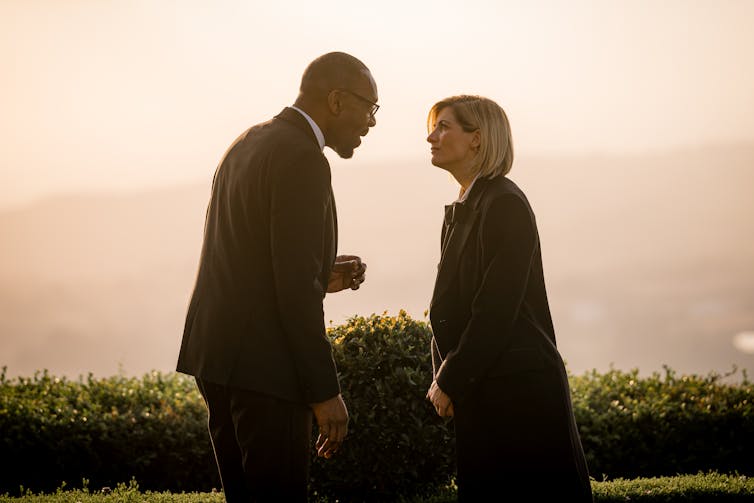
Yet Martin鈥檚 Doctor is not (as yet) the series鈥� lead. Progressive voices in fandom have sometimes suggested that, when Whittaker eventually leaves the series, her successor will most likely (and most appropriately) be a woman of colour. There may now be those who fear that Martin鈥檚 tangential Doctor (whoever and whenever in the Time Lord鈥檚 timeline she may turn out to be) has ticked both those boxes 鈥� and that the production team may next time once more fall back on casting a white, male lead.
These arguments will doubtless continue to rage, along with much bigger ones. The polarisation of political perspectives among the British public since the Brexit referendum of course remains a matter of ongoing national concern. The current disagreements amongst Doctor Who fans 鈥� once a group which unambiguously embodied the liberal consensus 鈥� may appeal to the mainstream media precisely because they mirror those larger societal divisions, and may prove of greater significance as indicative of those broader ideological shifts and splits.
, Dean of the Faculty of Arts,
This article is republished from under a Creative Commons license. Read the .
Press Office | +44 (0) 1962 827678 | press@winchester.ac.uk |
Back to media centre